Optical Ultrasonic Sensor
Hear What Other Sensors Can’t
Non-Contact. Unparalleled Bandwidth. Ultra-Sensitive.
For Transducer Characterization
Hear the Full Picture
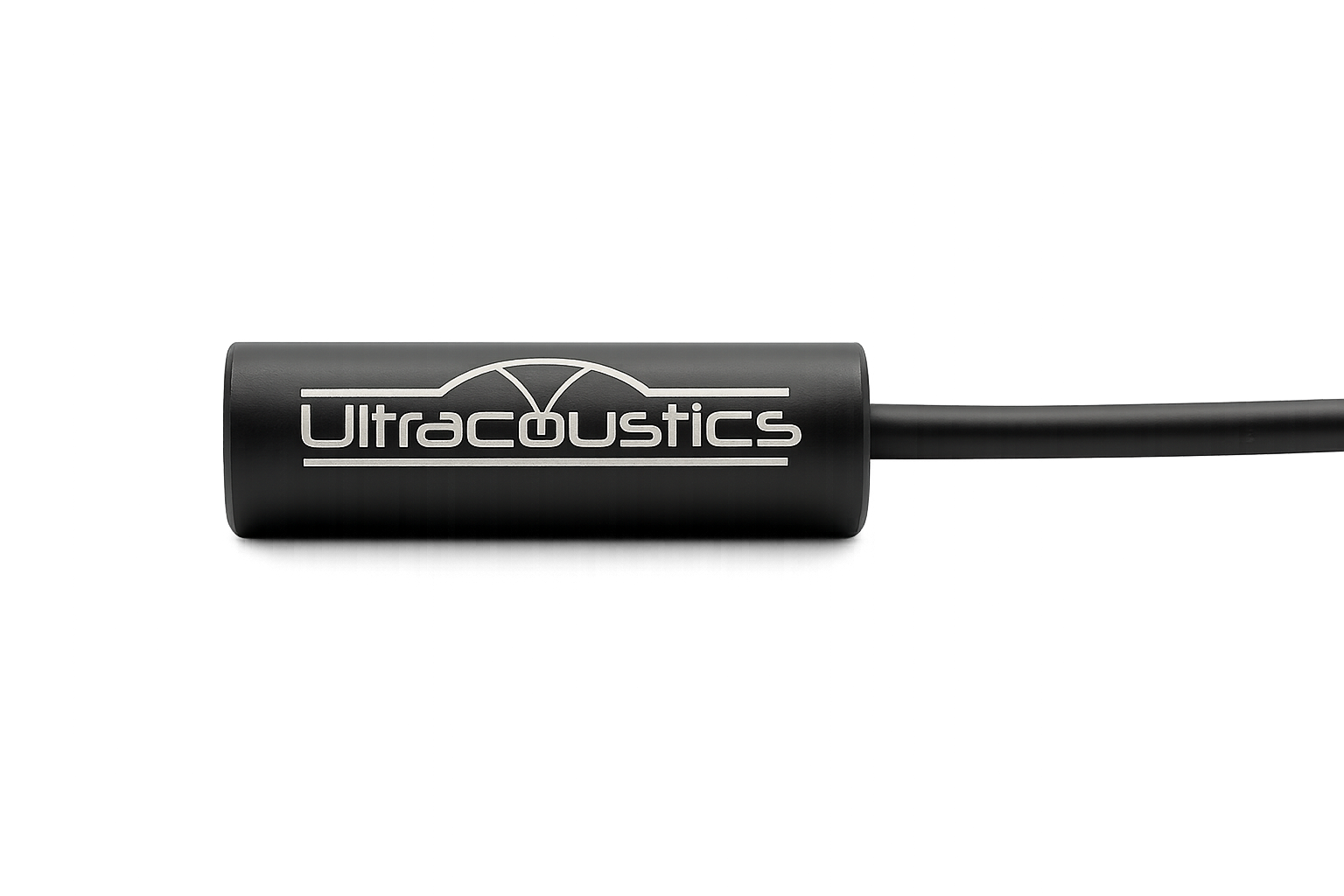
With up to 5 MHz bandwidth, BROADSONIC captures signals that human ears and standard sensors miss. It delivers real-time data for acoustic analysis, gas leak detection, ultrasonic cleaning monitoring, and partial discharge detection.
Learn About BROADSONIC
Applications
Engineered for Critical Sensing
Leak Detection
Omnidirectional, gas-agnostic detection of micro-scale leaks through broadband ultrasonic sensing, even in high-noise industrial environments.
Learn MoreUltrasonic Cleaning
Real-time, non-contact cavitation monitoring from above the tank. Detect transducer drift, degradation, and process anomalies before they affect part quality.
Learn MorePartial Discharge
Non-contact acoustic detection of partial discharge events. Captures the full PD spectrum up to 5 MHz with complete immunity to electromagnetic interference.
Learn MoreNon-Destructive Testing
Non-contact ultrasonic C-scans, bond inspection, and sub-micron thickness mapping. See defects traditional inspection misses.
Learn More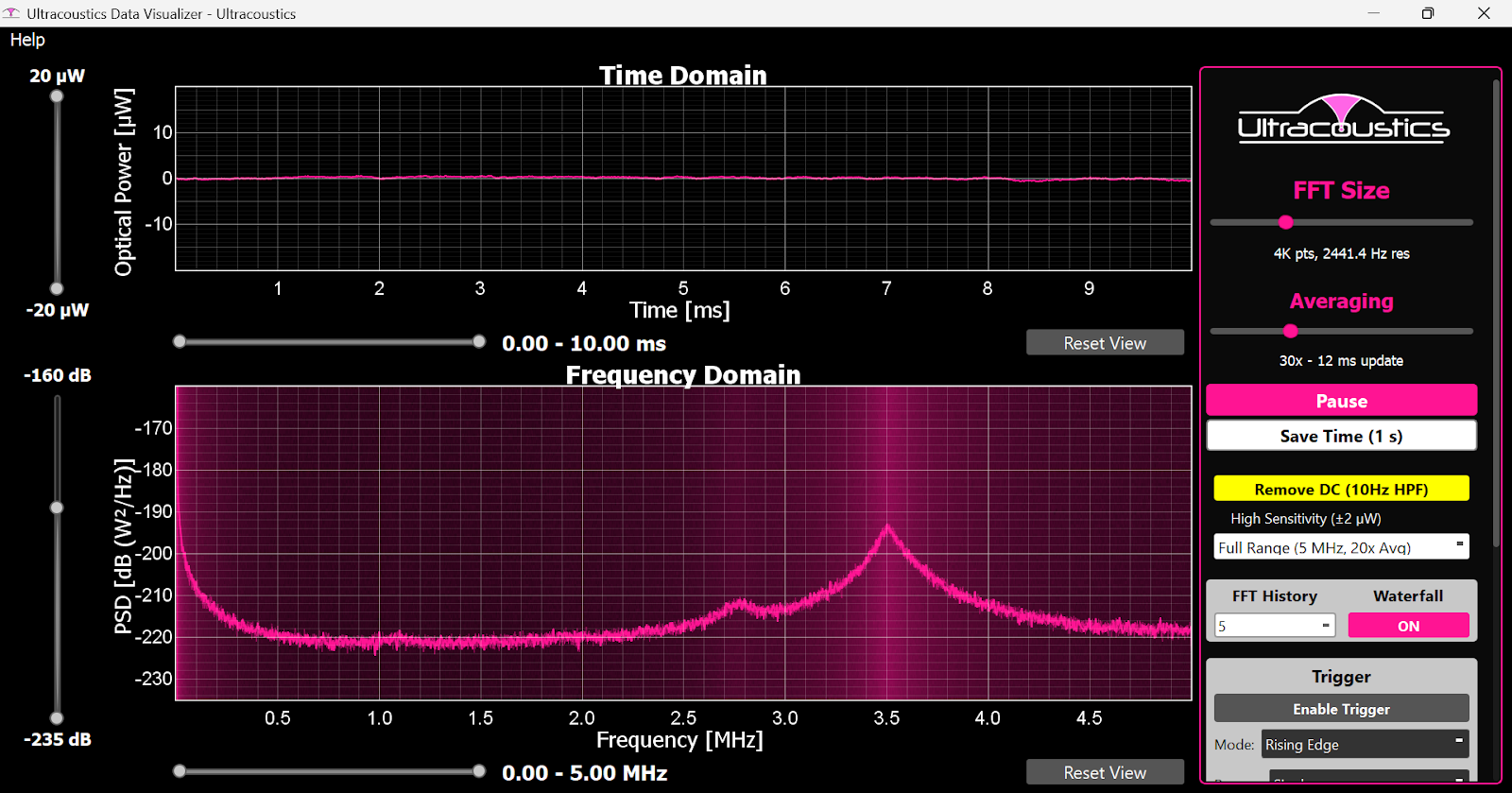
Included Software
Ready Out of the Box
Every BROADSONIC ships with the Ultracoustics Data Visualizer — real-time time-domain and FFT streaming, broadband analysis, and one-click data export.
Available Now
Transducer Characterization Service
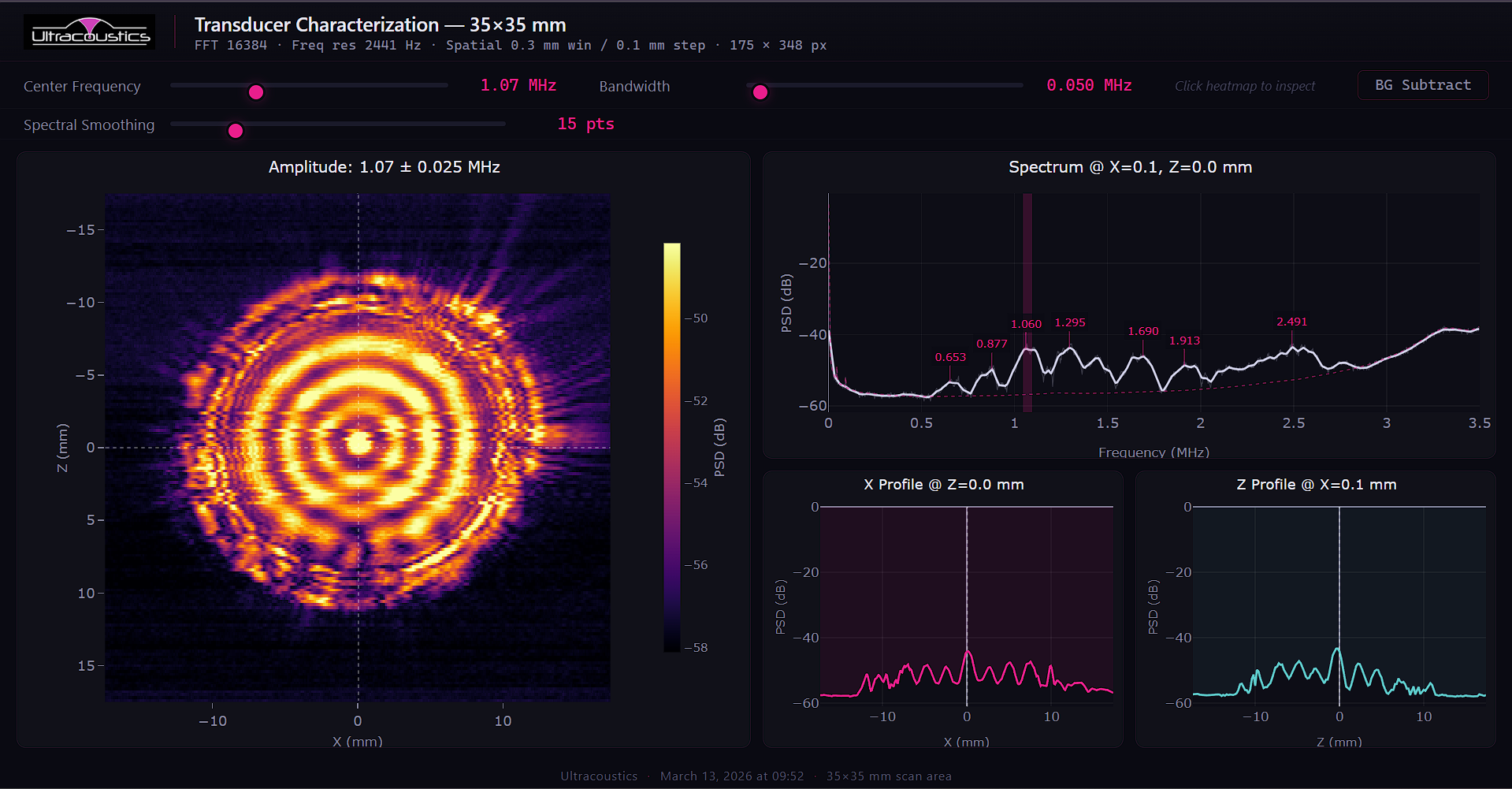
Ship us your transducer. Get a full broadband beam profile — 0 to 5 MHz at 0.1 mm resolution — delivered as an interactive report within one week. No couplant, no water tank, no repeat scans.
Why BROADSONIC
How We Compare
| Feature | BROADSONIC | Air-Coupled Piezo | Conventional Ultrasonic |
|---|---|---|---|
| Bandwidth | DC – 5 MHz (flat) | Narrowband (~30% fractional) | 20 Hz – 100 kHz |
| Contact Required | No (air-coupled) | No (high insertion loss) | No (air-coupled) |
| EMI Immunity | Complete (optical) | Poor | Partial |
| Sensing Principle | Optical (Fabry-Perot) | Piezoelectric / Composite | Capacitive / MEMS |
| Omnidirectional | > ±60° | Directional | Varies |
| Active Sensor Diameter | 100 μm | 10–25 mm | ~6 mm |
At a Glance
Technology Comparison
Peer-Reviewed
Backed by Peer-Reviewed Research
10+ peer-reviewed publications in JASA, Applied Physics Letters, Nature Microsystems & Nanoengineering, Optica, and more.
Ecosystem
Backed by Leading Institutions






Momentum
Latest News

Jun 2026 · News
Ultracoustics Joins Built World Tech Cohort 2
One of four Edmonton companies advancing pilots through the Venture Pilots program — partnering with AIMS (PIP360) on pipeline integrity monitoring.

May 2026 · News
Ultracoustics + SBS Ecoclean: Megasonic Wafer Cleaning
Integrating BROADSONIC into Ecoclean's UCMPerformanceLine to extend Acoustic Performance Measurement into the megahertz range for semiconductor wafer cleaning.